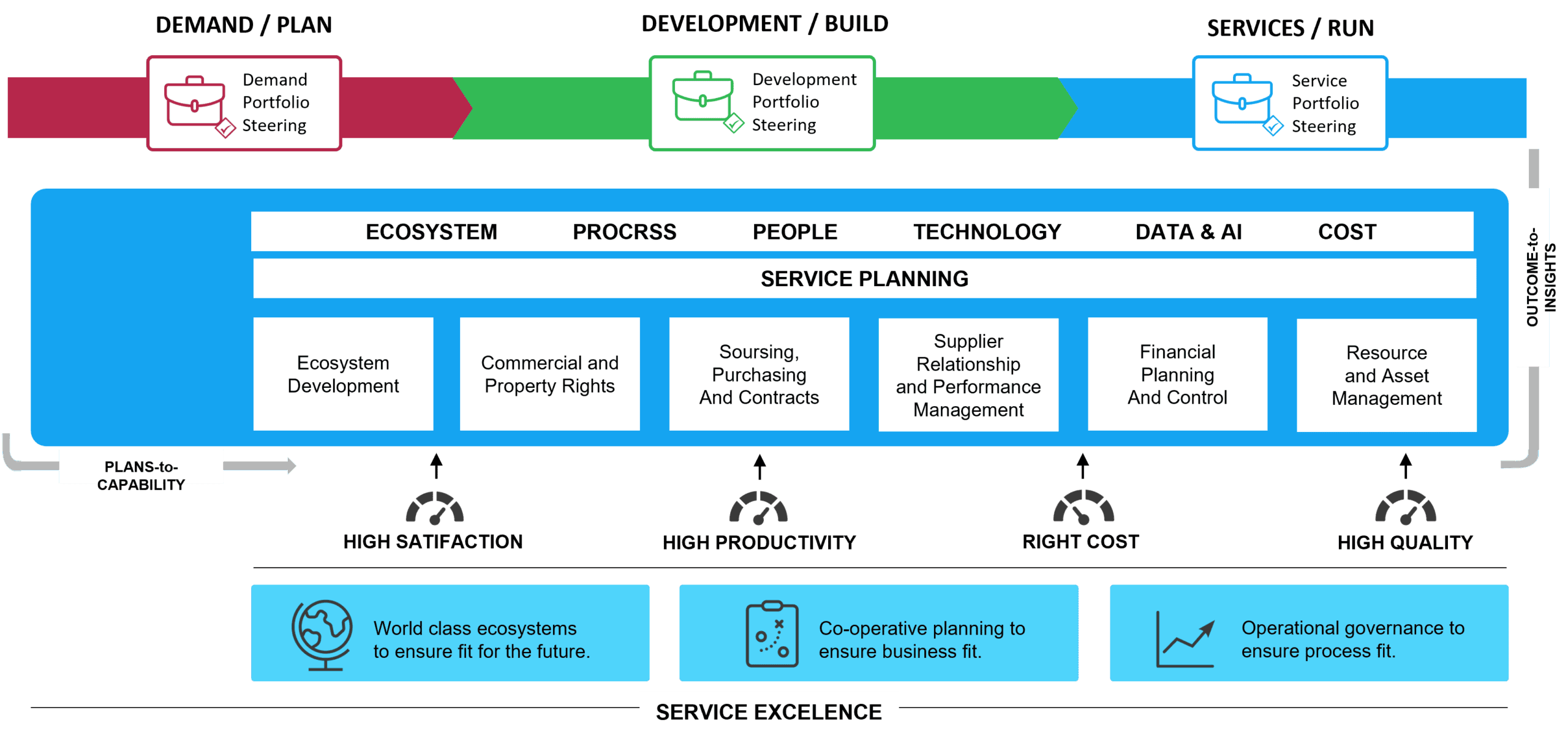
Service Planning is a business technology capability that ensures each individual service remains purposeful, economically justified and aligned with business priorities throughout its lifecycle. It defines why a service exists, how it is governed and funded, how it is operated, and how it evolves over time.
Once business capabilities and future solution structures are understood, the same planning discipline must define how individual services are managed as business capabilities. Services carry ongoing cost, operational commitments, sourcing dependencies and user expectations. They therefore need deliberate planning, not only operational management.
As services become more automated and AI-enabled, service planning must also define which parts of the service are performed by people, systems, automation or AI agents. This affects the service promise, support model, data dependencies, monitoring needs, fallback arrangements and lifecycle controls. Service planning ensures that AI-enabled capabilities are introduced as managed parts of the service rather than isolated technical features.
Without disciplined service planning, services gradually drift. Costs increase without clear accountability, changes are made without understanding long-term impact, and operational commitments no longer reflect actual business needs. Over time, the service becomes harder to manage, more expensive to maintain and less able to support business operations.
Service Planning addresses this by maintaining a clear and continuously updated service plan and linking it directly to the service portfolio and the service catalogue. This creates transparency around purpose, cost, performance, lifecycle direction and user-facing commitments.
Service planning is a management capability rather than an operational task. It provides a structured view of a service as a business capability with defined objectives, costs, responsibilities and lifecycle direction.
The service plan sets out:
This ensures that the service has a clear mandate and that continued investment is deliberate rather than habitual.
The service plan is the primary decision document for the service. It provides the agreed view of what the service delivers, what it costs and how it will develop. When the service plan changes, this is reflected in the service portfolio, where priorities and investment levels are visible, and in the service catalogue, where users see what is offered and under which conditions. In this way, financial decisions and operational commitments remain aligned.
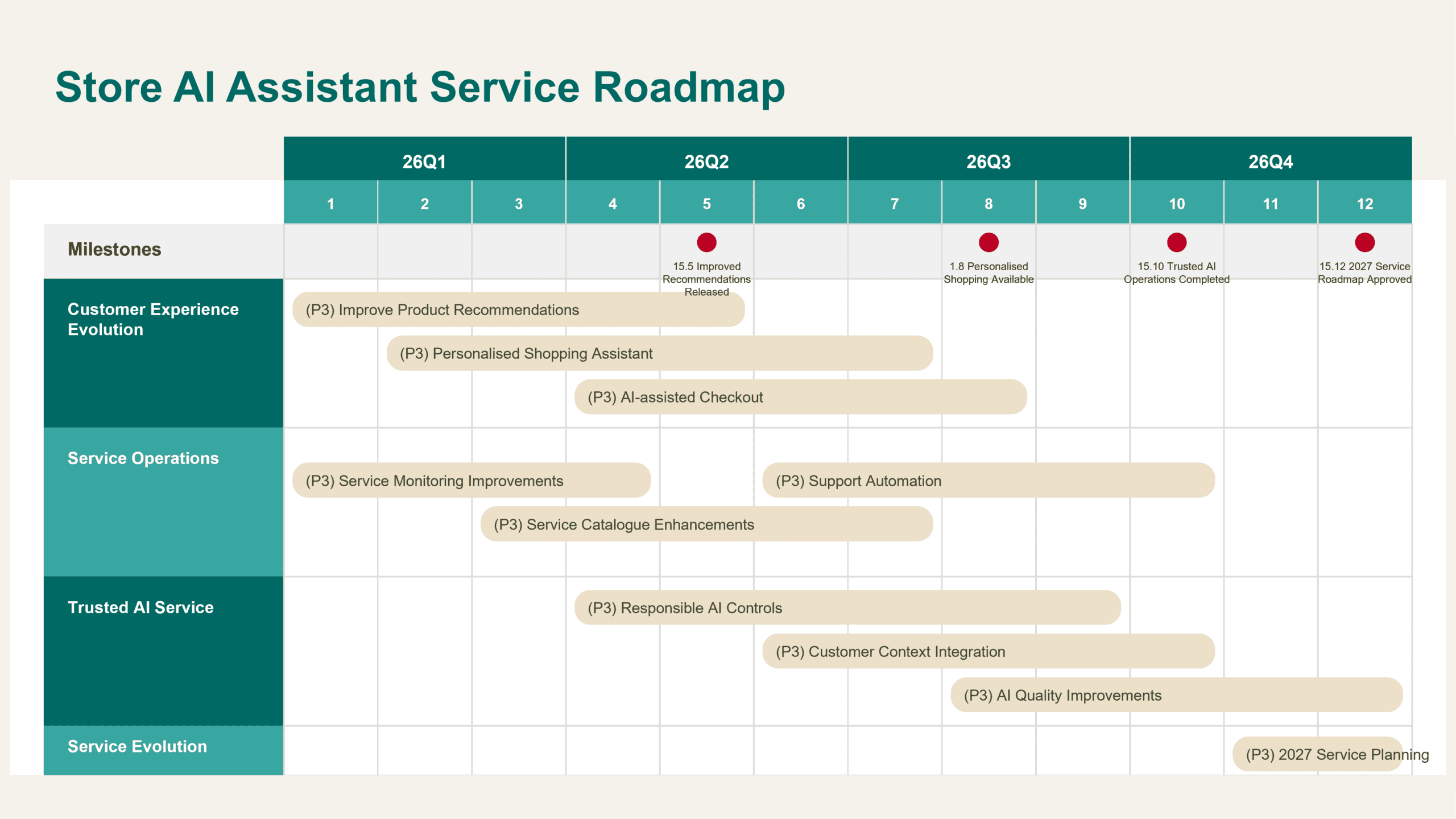
Service planning also safeguards structural coherence at the level of the individual service. It ensures that upgrades, supplier changes, contract renewals and lifecycle transitions are assessed against business objectives, architectural constraints and operational commitments. Cost, performance, sourcing and lifecycle are therefore considered together as part of one management view rather than in isolation.
Clear ownership underpins effective service planning.
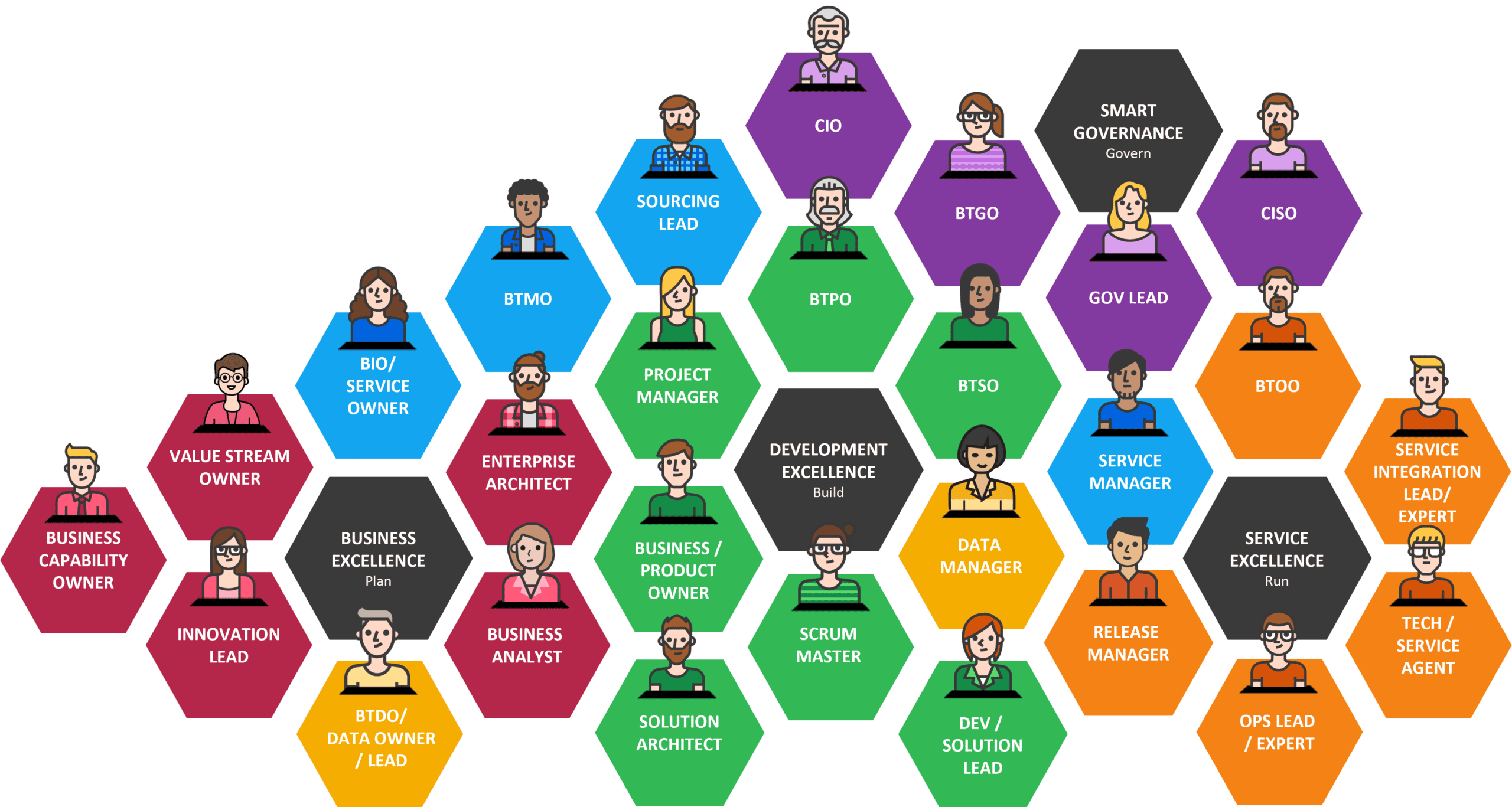
The Service Owner is accountable for lifecycle direction, performance and financial integrity, and ensures that the service continues to meet business needs and deliver expected value. The Service Manager maintains the service plan, coordinates operational delivery and ensures that service performance and operational realities are reflected in planning.
Service planning is integrated with portfolio governance. Significant changes in scope, funding, sourcing model or lifecycle stage are reflected in the service portfolio, ensuring transparency across all services.
The service catalogue represents the operational view of the service. It defines what is provided, to whom, under which service levels and at what cost. Service planning ensures that the catalogue remains consistent with the service plan. Portfolio, catalogue and service plan form a connected governance structure, reducing the risk of misalignment between intent, funding and delivery.
Services rarely fail suddenly. More often, they become gradually inefficient. Costs increase relative to value delivered, flexibility decreases and contractual or technical constraints limit change.
Service planning introduces explicit lifecycle management. Each service is assigned a lifecycle stage and criticality level. Planned improvements, stabilisation measures or retirement decisions are documented in the service plan.
Performance indicators and cost development are reviewed against agreed objectives. When the value delivered no longer justifies continued investment, alternative actions such as modernisation, consolidation, replacement or retirement can be assessed in a structured manner.
Lifecycle management is therefore not only a technical concern. It combines financial transparency, sourcing clarity, performance management and alignment with business objectives into a single, controlled decision framework.
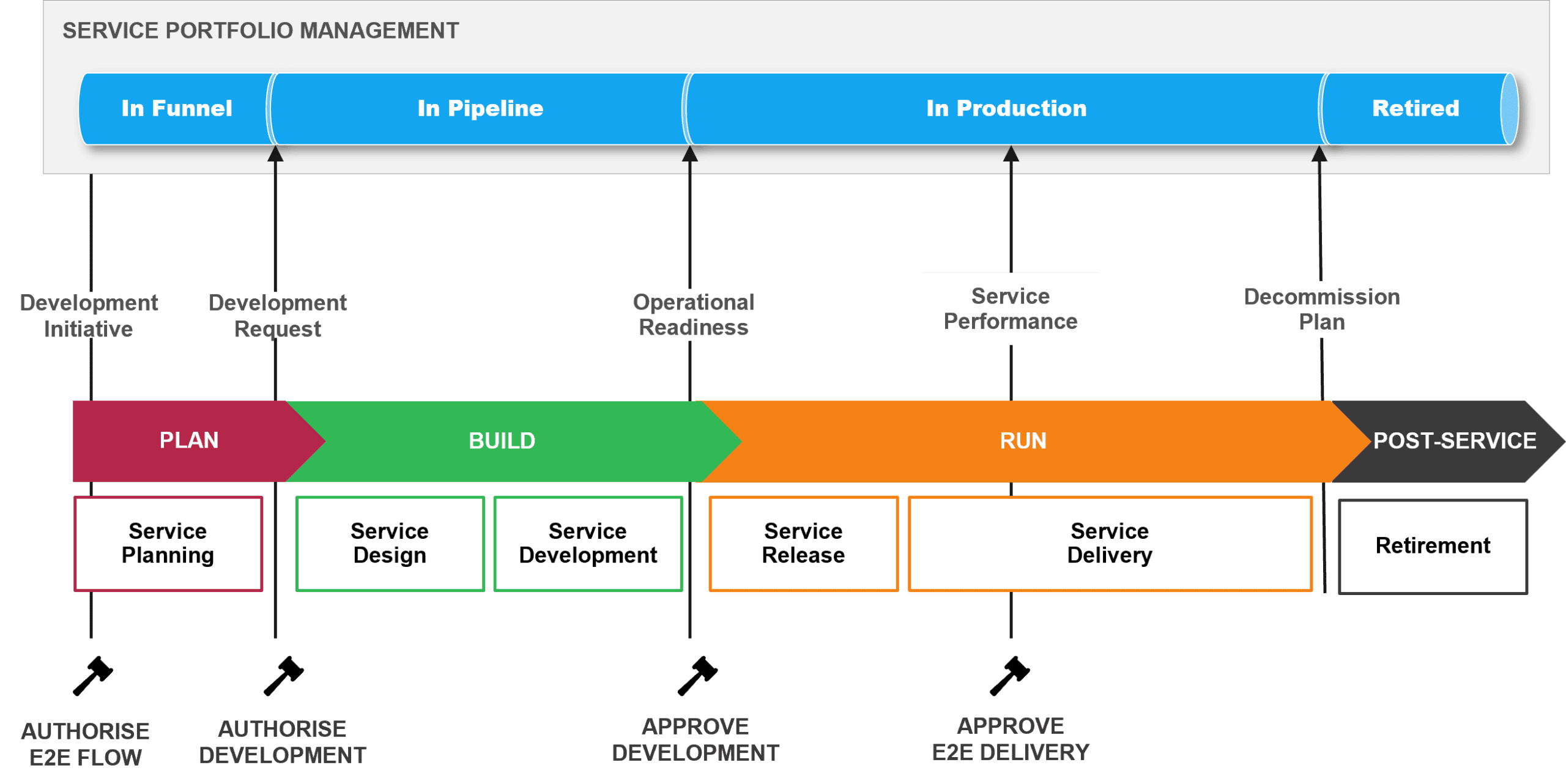
Service planning is a continuous capability rather than a one-off exercise. The service plan, its portfolio position and its catalogue entry are reviewed as business priorities, usage patterns, cost development, sourcing conditions and development needs evolve.
Through this disciplined and ongoing practice, each service evolves intentionally, remains economically controlled and continues to support business operations effectively. Service planning therefore maintains structural coherence, financial accountability and operational clarity at the level where business value is realised: the individual service.