Information technology, data and AI are embedded in almost every part of modern business. They shape how people work, how customers are served, how decisions are made and how organisations develop and improve their products, services and operations.
At the same time, new information technology and AI capabilities are becoming easier to access and use. The opportunity is not simply to adopt more technology, but to combine business understanding, people and information technology to continuously improve business capabilities and create measurable value.
What is business technology?
Business technology is the integrated use of business expertise and information technology to create value. Business and information technology development are therefore managed as connected activities rather than separate worlds.
The business technology mindset illustrates this through three perspectives: transform business capabilities, build the digital frontline for customers and employees, and modernise the technology backbone that supports operations. Like a zipper, all three need to develop together.
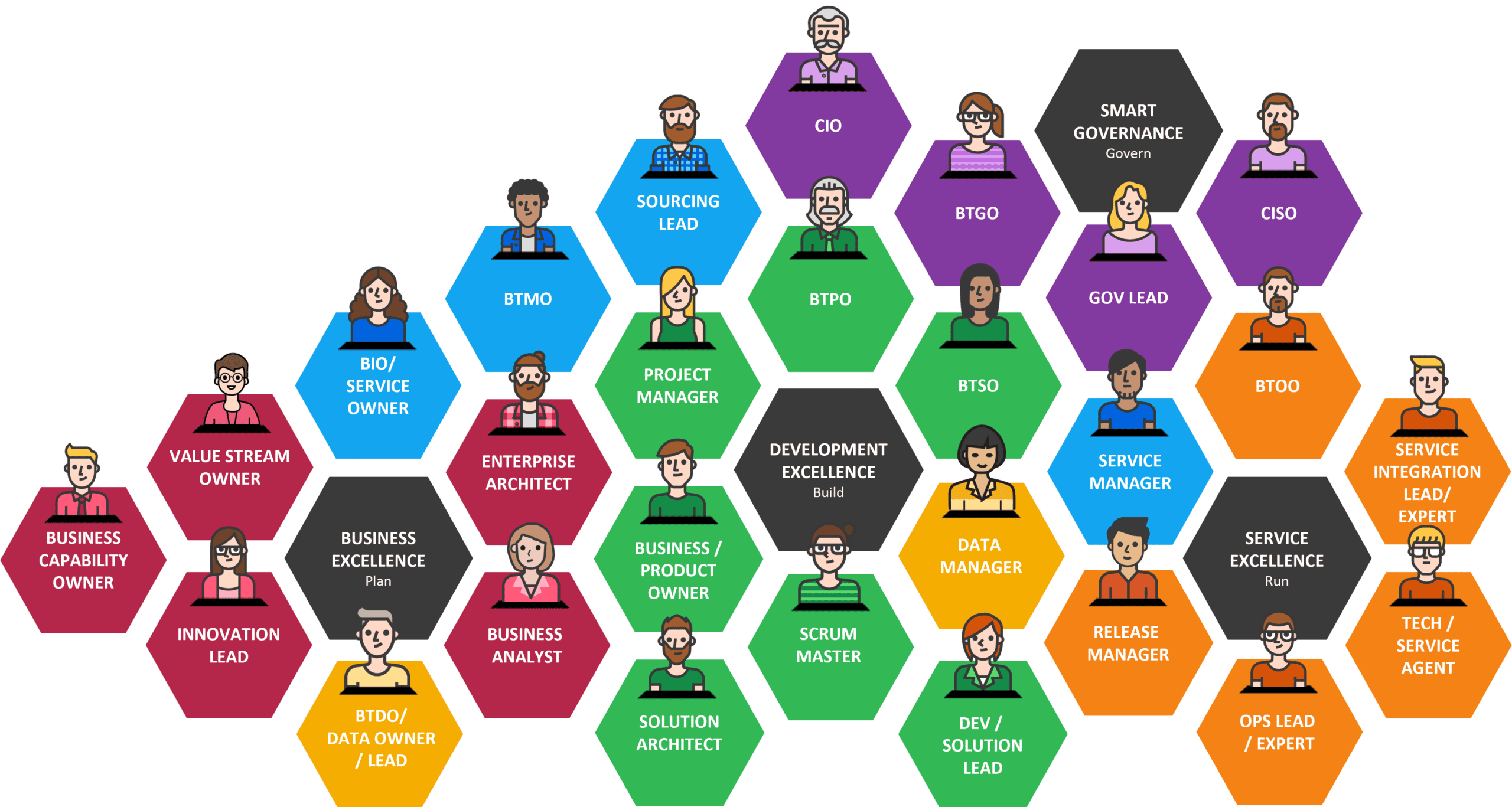
People are at the heart of this mindset. Business and information technology professionals combine their different competences and perspectives to shape needs, make decisions, develop solutions and realise value.
Data and AI create new possibilities for improving decisions, automating work and developing new capabilities. They also increase the importance of clear ownership, well-defined ways of working and human judgement.
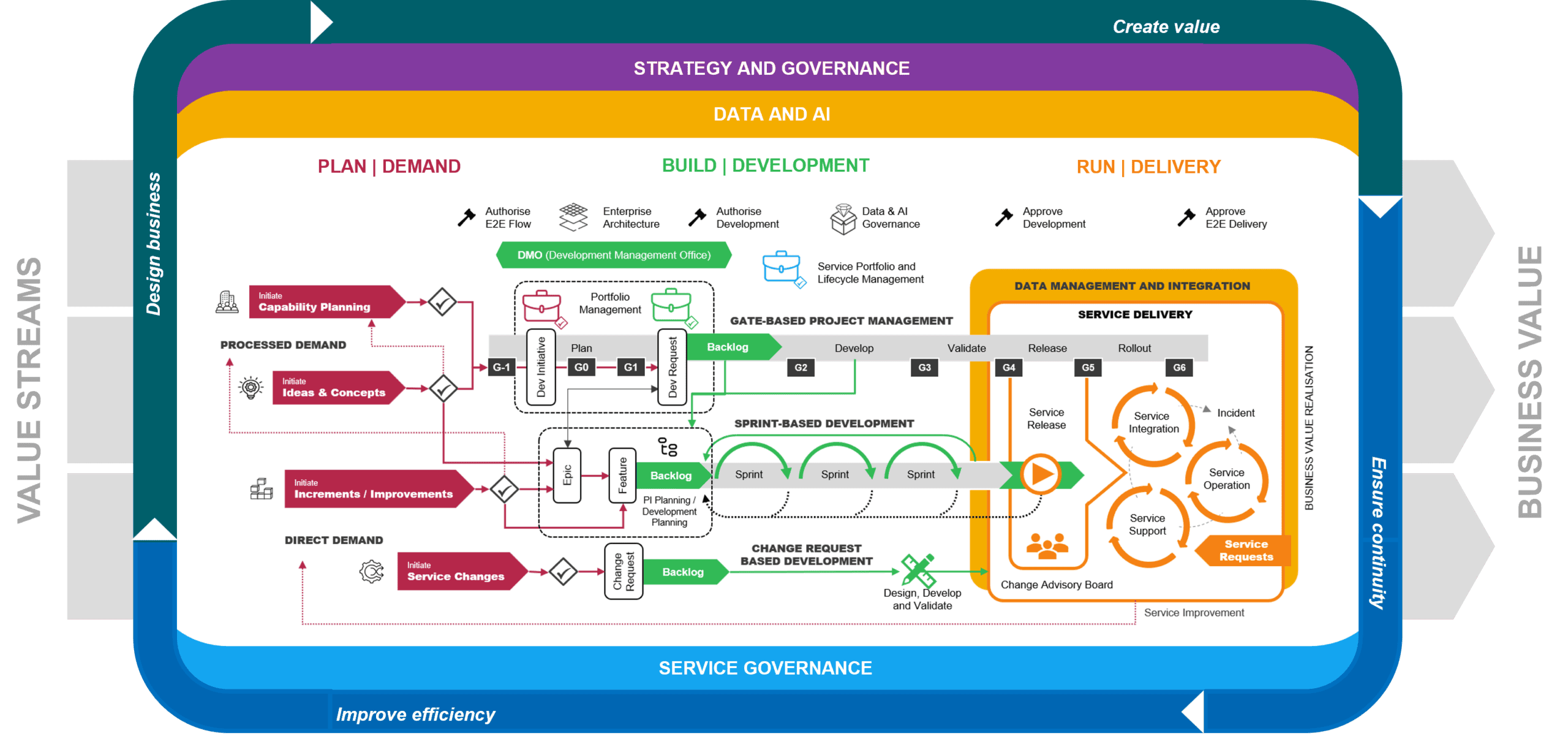
The Business Technology Standard turns this mindset into a practical operating model, connecting capabilities, roles, governance and end-to-end value creation.
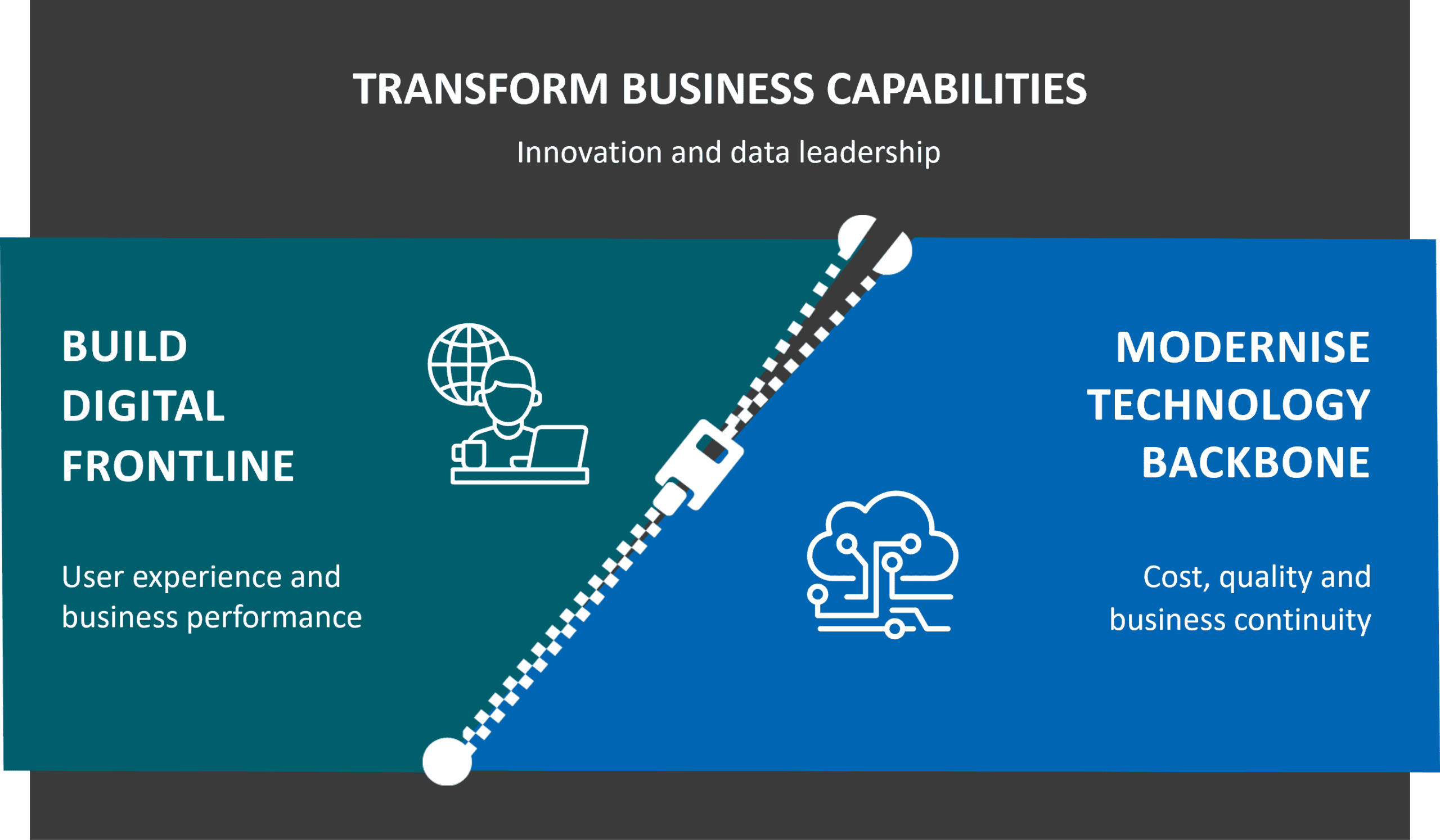
Transform business capabilities
Business capabilities describe what an organisation needs to be able to do consistently to create value. They combine people, ways of working, information, data and information technology.
Transforming a business capability means improving how these elements work together. New technology and AI create new possibilities, but value is realised only when they improve how the organisation works and serves its customers.
In the Business Technology Mindset, transform business capabilities gives direction to both the digital frontline and the technology backbone.
Build digital frontline
The digital frontline is where customers, employees and other users interact with the organisation through digital services and solutions. It plays a central role in customer and employee experience and increasingly in how services are delivered.
Building the digital frontline means continuously improving these interactions by combining business understanding with information technology, data and AI. The aim is not simply to digitalise existing activities, but to create better experiences and better ways of delivering value.
The digital frontline must develop together with business capabilities and the technology backbone, rather than as a separate layer.
Modernise technology backbone
The technology backbone provides the information technology capabilities that keep the organisation running and enable the digital frontline. It includes the platforms, applications, infrastructure, integrations and services on which business operations depend.
Modernising the technology backbone means keeping these capabilities reliable, secure, cost-effective and able to evolve as business needs change. Cloud, platforms and automation create new opportunities to improve both efficiency and flexibility.
The technology backbone must evolve together with the digital frontline and business capabilities to support continuous value creation.
Technology domains
Information technology is embedded throughout modern organisations and increasingly in their products, services and operations. Its role and form vary depending on where and how it is used.
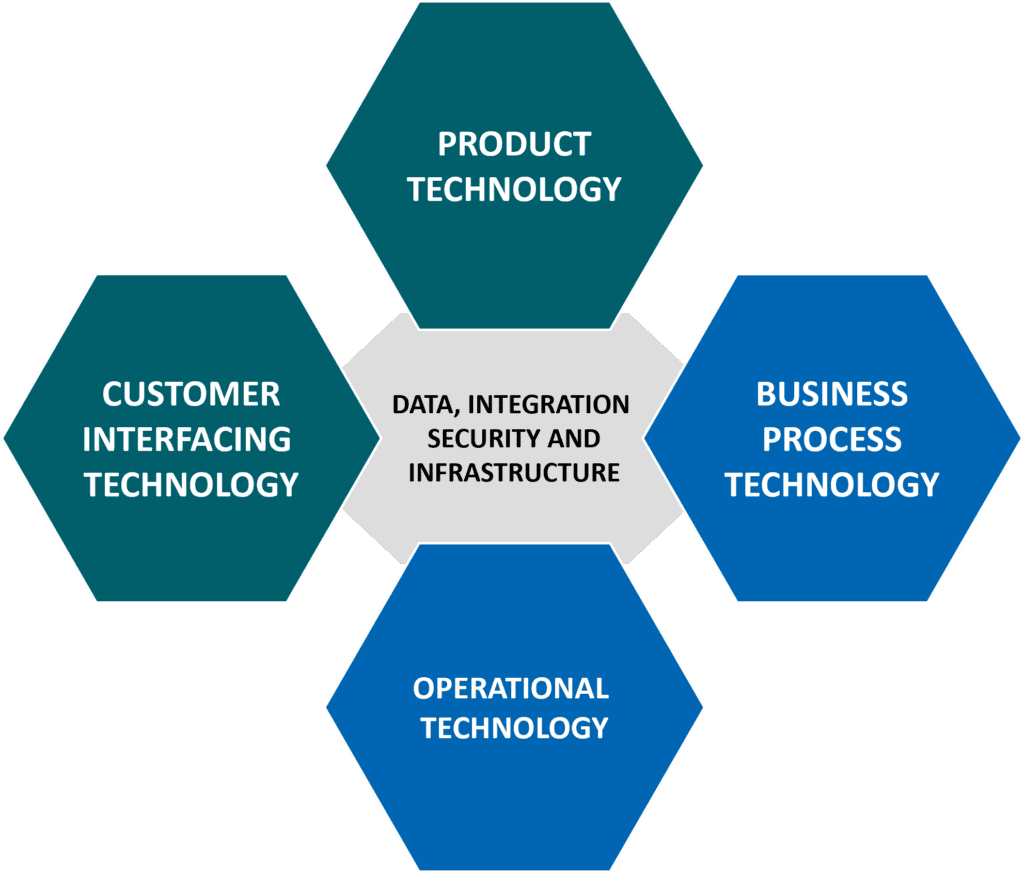
BTS distinguishes four technology domains: customer interfacing technology, product technology, operational technology and business process technology. Together, they help organisations understand how information technology is used in different business contexts and how these technology needs connect across the organisation.
All four domains depend on shared foundations such as infrastructure, data, integration and security.
Customer interfacing technology
Customer interfacing technology enables digital interaction between an organisation and its customers, users and other external stakeholders. It includes digital channels, online services, mobile solutions and other technologies that shape the customer experience.
Data and AI increasingly make these interactions more personalised, responsive and automated. The focus is not only on the technology itself, but on creating useful and trusted customer experiences.
Product technology
Product technology is information technology embedded in, or closely connected to, the products and services an organisation provides to its customers. It can enable new functionality, improve existing offerings or create entirely new digital products and services.
As products become increasingly connected, data-driven and AI-enabled, product technology becomes an important part of both product development and continuous value creation.
Operational technology
Operational technology supports and controls physical operations, such as manufacturing, logistics, buildings, energy and other operational environments. It connects information technology with machines, equipment, sensors and physical processes.
Connectivity, data, automation and AI increasingly enable organisations to monitor, optimise and automate these operations. Reliability, safety, security and continuity remain essential as operational and information technology become more interconnected.
Business process technology
Business process technology supports people in performing and managing everyday business activities. It includes the applications, platforms and digital tools used in areas such as finance, sales, human resources, procurement and collaboration.
AI is rapidly changing this domain. It can support people in knowledge work, automate activities and enable new ways of organising work. The objective is not simply to automate existing processes, but to improve how work is performed and how business value is created.
Shared technology foundations
The four domains increasingly share common platforms, data, integrations, cloud services and security capabilities. Decisions made in one domain can therefore affect services and capabilities across the organisation.
Data and AI increasingly work across these boundaries, making shared architecture, governance, data management, security and service management essential across the technology domains.
Managing business technology as one whole
The technology domains should not become separate management silos. Customer services may depend on business applications, operational environments may use shared data platforms, and AI-enabled capabilities may work across several domains.
The Business Technology Standard provides the common operating model that connects these environments. It helps organisations manage information technology, data and AI as part of one end-to-end value creation system, while allowing each technology domain to use the specialised practices it requires.
.